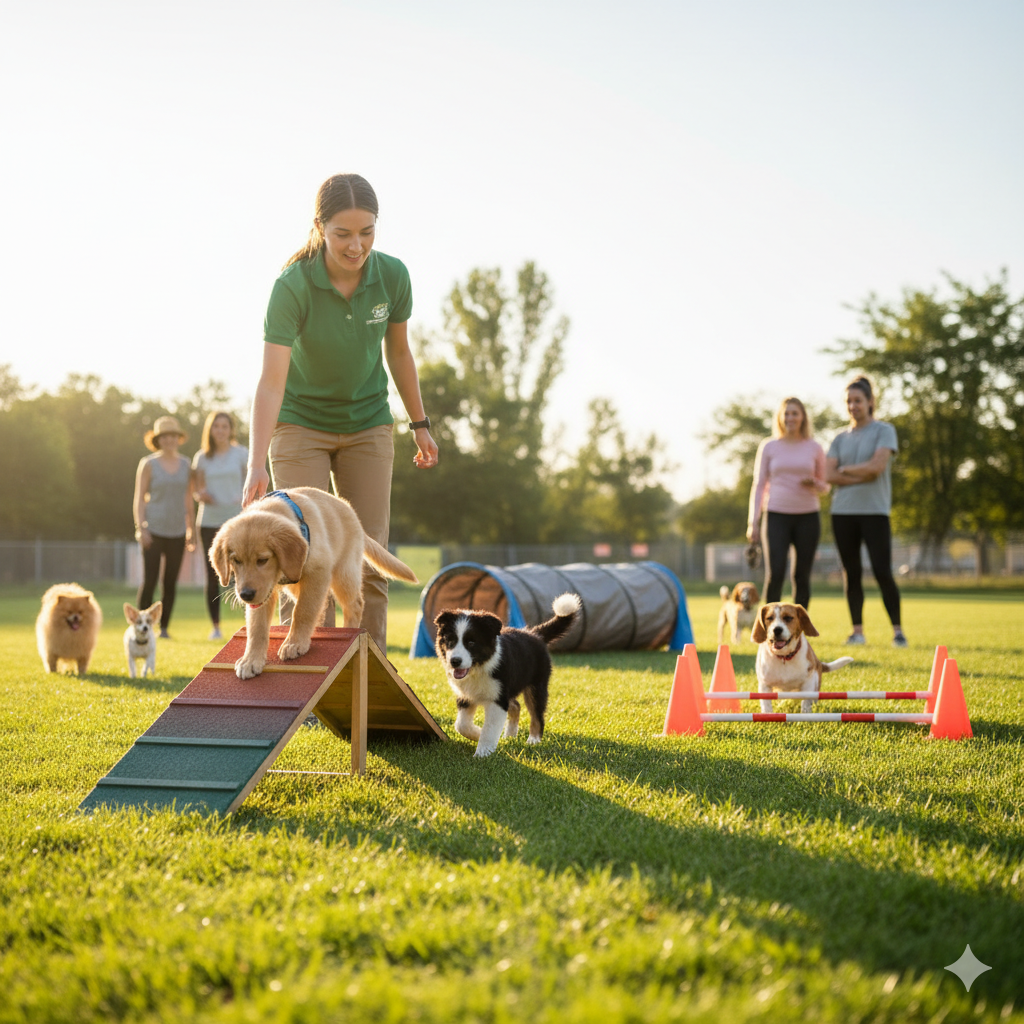
Why puppy training?
Taking a dog class as a puppy gives your dog a safe and positive start in life. During the puppyhood, the dog is extra receptive to learning, and the course gives it the opportunity to develop important social skills together with other dogs and people.
In the dog course, the puppy learns the basics of everyday obedience, such as contact, compliance and simple commands – skills that make it easier both at home and at doggy daycare. At the same time, you as a dog owner gain knowledge about how dogs communicate, how to build a strong relationship with your puppy and how to create safe routines.
A puppy that has been trained in dog training often becomes more confident, harmonious and easier to understand, which provides better conditions for a happy dog life. It is an investment in both your dog's well-being and your future everyday life together. 🐾
Content
A puppy course usually includes both practical exercises and theory to give the puppy a safe start and the owner the right tools:
Practical training
- Contact and cooperation – teach the puppy to listen and seek contact with you
- Walk nicely on a leash – without pulling
- Calling – coming when called
- Stop and wait – basic self-control
- Sit, lie down, stand – simple signals/commands
- Handling training – getting used to brushing, claw trimming, veterinary check-ups
- Socialization – meeting other dogs and people in a controlled manner
Theory
- Dog language – signals, body language and stress
- Learning principles – positive reinforcement, reward techniques
- Puppy Development Stages – What to Expect at Different Ages
- Environmental training – train in different environments and situations
- Common challenges – biting, jumping, loneliness training
- Health and care – diet, exercise, coat care, vaccinations
Course at Bergslagen Dog Academy
Location: Karlskoga
Length: 6 sessions
Price: 2000 SEK
Goal: Create a safe foundation for both puppy and owner through practical training and theoretical knowledge.
Event 1 – Welcome & contact
- Presentation of participants and course structure
- Reward methods and positive reinforcement
- Contact exercises – get your puppy to seek you out
- Name game
- Short theory: the dog's language & signals
Opportunity 2 – Leash training & obedience
- Walks well on a leash.
- Change direction and pace
- Stop and wait for signal
- Theory: puppy development phases and environmental training
Occasion 3 – Call-up
- Recall exercises with disruption
- Reward techniques for quick response
- Theory: safety and risks of stray dogs
- Socialization in a controlled form
Occasion 4 – Basic commands
- Sit, lie down, stand - on cue
- Short rules exercises (wait, stop)
- Handling training (claw trimming, vet visits)
- Theory: everyday obedience and problem solving
Event 5 – Social training & environmental training
- Meeting other dogs on walks
- Training in different environments
- Theory: solitude training and mental activation
- Practice: simple activation exercises
Event 6 – Rehearsal & diploma
- Repetition of all steps
- Larger combination exercise
- Theory: continued training at home and next steps
- Diploma award ceremony
Additional tips:
- Between each meeting, participants are given "homework" with 2–3 short exercises to practice at home.
- Add a page with pictures of the steps for clarity.


